
Key Takeaways
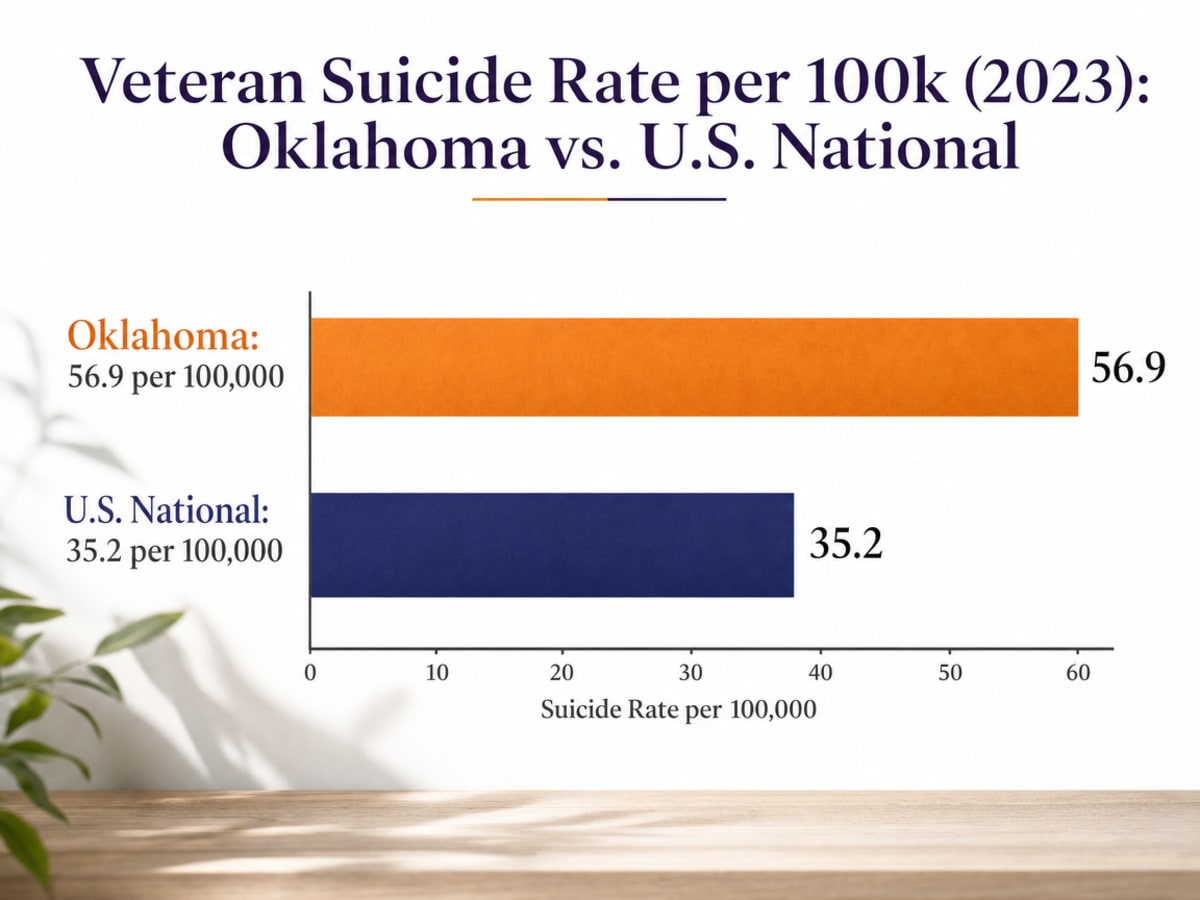
- Oklahoma veterans face a suicide rate of 56.9 per 100,000, well above the national veteran average, driven by untreated trauma paired with alcohol or opioid use 5.
- VA substance use services cluster around Oklahoma City and Muskogee, so rural veterans often need community care referrals or private residential options to avoid long travel 7.
- Military-competent care treats PTSD and substance use together under one team, using clinicians who understand combat exposure, moral injury, and service culture 12.
- TRICARE East, VA community care referrals, and SoonerCare can be combined to fund detox, residential, and outpatient care, and admissions teams can verify coverage before committing.
Understanding the Landscape of Veteran Addiction in Oklahoma
If you’re a veteran in Oklahoma reading this at 2 a.m., or a spouse who has finally stopped waiting for things to get better on their own, start here. You are not overreacting. The numbers back up what your gut has been telling you.
In 2023, Oklahoma’s veteran suicide rate reached 56.9 per 100,000 — well above the national veteran rate of 35.2 per 100,000 5. This elevated risk often stems from untreated trauma combined with alcohol or opioid use. Geographic challenges also play a role, with VA substance use services primarily concentrated around Oklahoma City and Muskogee 7. For veterans in more rural areas, distance can be a significant barrier to seeking help.
The military culture of self-reliance can also make asking for help feel like a failure. This instinct, once vital for survival, can now hinder recovery. It’s crucial to understand that multiple pathways to recovery exist beyond the VA system, including private, trauma-informed residential programs that accept TRICARE East. Knowing all your options is key to making an informed choice.
The Necessity of Veteran-Specific Addiction Care
The Interconnection of PTSD, Alcohol, and Opioids
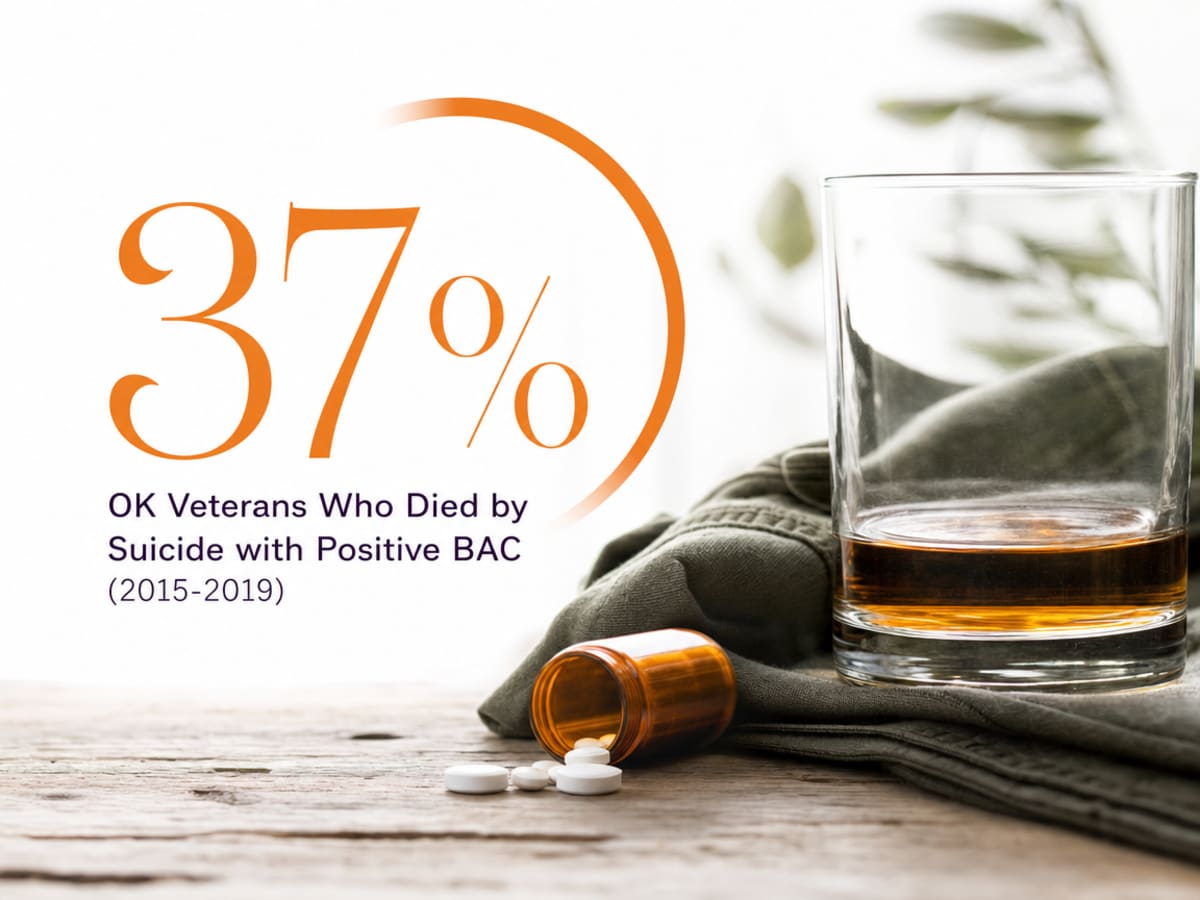
For many veterans, substance use is a coping mechanism for underlying trauma. Research indicates a strong link between PTSD and substance use disorders. Among Oklahoma veterans who died by suicide between 2015 and 2019, 37% had a positive blood alcohol content at the time of death 4. Alcohol often co-occurs with depressed mood, mental health problems, and physical pain 4.
Co-occurring PTSD and substance use disorders are highly prevalent in veterans, and clinical evidence strongly supports treating them simultaneously for effective recovery 12. Factors like combat exposure, moral injury, and the psychological burden of service significantly influence substance use patterns and make cessation challenging 11. A treatment program that overlooks these military-specific experiences will likely miss crucial aspects of a veteran’s recovery needs.
Defining ‘Military-Competent’ Care
“Veteran-friendly” differs significantly from “veteran-competent.” A RAND analysis revealed that many veterans with mental health conditions do not receive care, and among those who do, only a minority receive treatment meeting basic quality standards, including consistent use of evidence-based practices and attention to deployment-related trauma 10. This gap is not closed by superficial gestures.
Military-competent care involves clinicians who understand military terminology (e.g., MOS, ETS) and the unique challenges veterans face, such as the emotional impact of holidays like the 4th of July. Effective programs integrate PTSD and substance use treatment, often with peer support from other veterans 12. Veterans should not have to translate their experiences into civilian language to receive appropriate help; a truly competent program facilitates this understanding.
Navigating VA Treatment Options in Oklahoma
STAR Clinic and Same-Day SUD Access in Oklahoma City
The Substance Treatment and Recovery (STAR) Clinic at the Oklahoma City VA offers same-day walk-in evaluations for drug or alcohol issues on weekdays 1. This low-barrier access is critical for veterans ready to seek help. Following the initial evaluation, the Oklahoma City VA can connect veterans to counseling, group therapy, and medication-based treatments tailored to individual needs 2.
For immediate crisis, the Veterans Crisis Line is available by calling 988 and pressing 1. The STAR Clinic can then be a subsequent step for ongoing support.
VA Residential Rehabilitation: OKC MH RRTP and McAlester
For veterans who require a more structured environment, Oklahoma offers two VA-run residential options. The Oklahoma City VA Medical Center’s Mental Health Residential Rehabilitation Treatment Program (MH RRTP) provides 24-hour therapeutic care for co-occurring mental health and substance use issues 3. This program also addresses related social factors like housing instability and unemployment 2.
Further east, the McAlester VA Clinic operates a residential facility focusing on substance abuse, homelessness, mental health, and joblessness through rehabilitation and community support 8. This option may be more accessible for veterans in southeastern Oklahoma. Due to limited beds and potential waitlists, it’s advisable to inquire about availability and interim steps when contacting these facilities.
Strengths and Limitations of VA Care
The VA system offers valuable resources, including same-day SUD access, medication-based treatment, and residential rehabilitation, particularly for veterans near OKC or Muskogee 1, 2, 3. However, geographical disparities mean that veterans in rural areas may face significant travel burdens to access these services 7.
Private Residential Care: Tailored Treatment for Veterans
Individualized Treatment Plans
Private residential programs designed specifically for veterans offer individualized treatment rather than a generic template. The intake process delves deeply into a veteran’s service history, MOS, combat exposure, and both documented and unacknowledged injuries. It explores sleep patterns, startle responses, and the origins of substance use, whether from self-medication or legitimate prescriptions.
Treatment plans are then crafted around these specific details, moving beyond a rigid 28-day schedule. Evidence-based dual diagnosis care ensures that PTSD and substance use are treated concurrently by the same team 12. Therapies like CBT, DBT, and trauma-focused approaches are integrated, and medication-assisted treatment is considered when appropriate. Group therapy is matched to the veteran’s current needs, not a predetermined schedule. A truly effective plan should reflect the veteran’s unique story from the outset.
The Therapeutic Value of Rural Settings
For veterans with hypervigilance, a rural treatment setting can be profoundly beneficial. The absence of urban noise and the presence of natural landscapes can help calm an overactive nervous system, promoting better sleep and reducing constant scanning behaviors. This environment supports the therapeutic process by minimizing external stressors 11.
Beyond tranquility, a rural location also provides physical distance from triggers, routines, and individuals associated with past substance use. While not a cure, this geographical separation offers leverage for recovery.
Country Road Recovery Center: Veteran-Focused Care in Pink, Oklahoma
Country Road Recovery Center, located on 136 acres in Pink, Oklahoma, offers a co-ed residential program for adults. Situated between Shawnee and Oklahoma City, it provides a rural, calming environment that is still accessible for families. The center offers a continuum of care, including residential, partial hospitalization, and intensive outpatient programs.
For veterans, Country Road emphasizes individualized treatment. Clinical approaches combine CBT, DBT, and trauma-focused therapy with holistic elements like equine therapy, art therapy, and outdoor activities. Medication-assisted treatment is available when clinically indicated. The program operates on a dual diagnosis model, treating underlying trauma and mental health conditions concurrently with substance use, aligning with best practices for veterans with co-occurring PTSD and SUD 12.
Many staff members at Country Road are in long-term recovery themselves, fostering an environment of understanding and shared experience. Country Road is CARF accredited and works with most major insurers, including strong reimbursement through TRICARE East. When contacting admissions, veterans should inquire about specific accommodations for veterans, individualized planning, and TRICARE East verification.
Funding Treatment: TRICARE East, VA Community Care, and SoonerCare
TRICARE East Coverage for Addiction Treatment
TRICARE East provides substantial coverage for addiction treatment, not merely discounts. Depending on the specific plan and medical necessity, it typically covers a full spectrum of care, including inpatient detox, residential treatment, partial hospitalization, intensive outpatient, standard outpatient counseling, and medication-assisted treatment for alcohol and opioid use disorders. Mental health services are covered similarly, which is vital given the common co-occurrence of mental health issues and substance use.
Prior authorization is usually required for residential treatment, based on documented medical necessity. Reputable programs will assist with benefit verification, explaining coverage details, and handling the authorization paperwork. When calling admissions, ask if the program is in-network with TRICARE East, what levels of care your plan authorizes, and your estimated out-of-pocket costs. Country Road Recovery can verify TRICARE East coverage and discuss veteran-specific accommodations during the initial call.
VA Community Care Referrals
Veterans can access private treatment programs through VA community care referrals without leaving the VA system. If the VA cannot provide the necessary care, if travel distances are prohibitive (e.g., a two-hour drive to the nearest VA SUD program 7), or if wait times pose a risk, veterans may be eligible for the VA to fund treatment at a private facility that meets its standards.
To pursue a community care referral, veterans should contact their VA primary care team or the STAR Clinic and explicitly request an evaluation for residential SUD treatment. It is helpful to have the name of a preferred program ready and to follow up to ensure a written answer.
SoonerCare as a Supplemental Option
For veterans who qualify based on income, SoonerCare (Oklahoma’s Medicaid program) can supplement VA benefits or TRICARE, filling potential gaps in coverage. SoonerCare covers detox and residential substance use disorder services for adults, with prior authorization 9. This option is particularly valuable for veterans who are no longer enrolled with the VA, have aged out of dependent TRICARE, or are between jobs and coverage.
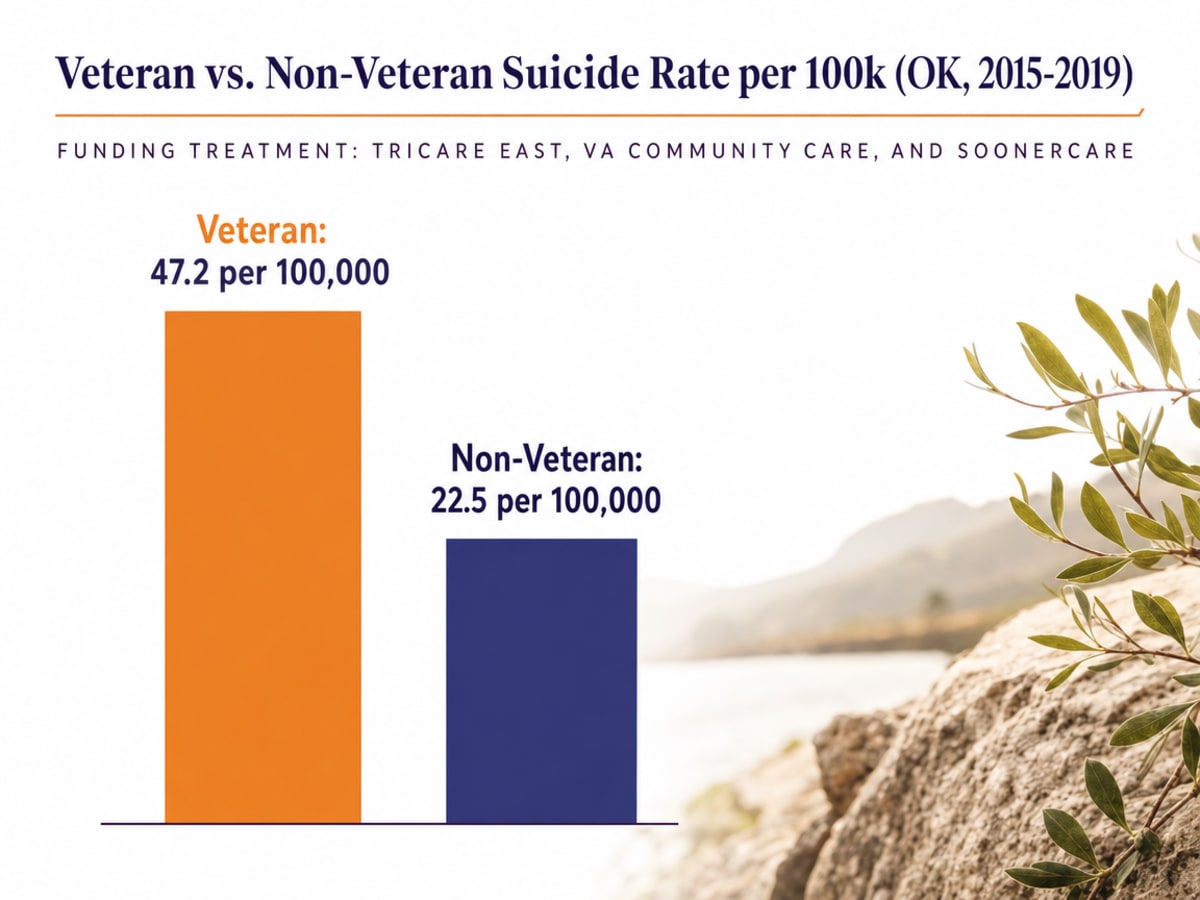
The need for comprehensive coverage is underscored by Oklahoma’s veteran suicide rate, which was 47.2 per 100,000 between 2015 and 2019, more than double the non-veteran rate of 22.5 per 100,000 4. Combining available benefits is a strategic way to ensure continuous and effective care.
Taking the First Step: Making the Call
Addressing Veteran Concerns About Seeking Help
Hesitation to seek help is often rooted in valid concerns, reflecting a veteran’s training in threat assessment. Common fears include:
- potential impacts on employment, security clearances, or promotions
- family reactions, the stability of their relationships, or how their children might perceive them
- discharge status or the clawback of VA benefits
It’s important to understand that seeking care is confidential and protected by federal privacy laws. Treatment records do not automatically become part of command or employer records. Getting help does not jeopardize VA benefits. Reaching out for support is an act of strength, not weakness, and is a continuation of the resilience demonstrated during service.
Guidance for Loved Ones Supporting a Veteran
For spouses, parents, adult children, or battle buddies supporting a veteran, the journey can be exhausting. It’s common to have rehearsed countless conversations and witnessed repeated cycles of promises and relapses. It’s crucial to recognize that your feelings are valid, and you are not responsible for the veteran’s struggles.
Your role can be to quietly gather information about available options. Understand that TRICARE East covers various levels of care, the Oklahoma City VA STAR Clinic offers same-day SUD evaluations 1, and private residential programs exist with staff who understand military service. Instead of lecturing or issuing ultimatums, consider a simple, direct question:“Would you be willing to let me make one phone call with you?”This small step can open the door to recovery.
Key Questions for Any Oklahoma Treatment Program
When contacting any treatment program in Oklahoma, whether it’s Country Road, a VA facility, or another option, you deserve clear answers. Here are essential questions to ask:
- Do you specifically treat veterans, and how does the treatment plan differ for those with combat exposure, PTSD, or moral injury? Is dual diagnosis (PTSD and substance use) treated integrally by the same team, or are referrals made elsewhere 12?
- What insurance do you accept? If you have TRICARE East, confirm if they are in-network, what levels of care your plan authorizes, and your estimated out-of-pocket costs. If you are VA-enrolled, ask about their acceptance of community care referrals.
- What are the qualifications and backgrounds of the staff? Are any team members veterans or in long-term recovery themselves? What accreditations does the program hold?
- What does the first week of treatment entail? What post-discharge support is offered, such as family programming, alumni networks, or aftercare?
When you call Country Road Recovery in Pink, Oklahoma, specifically ask these questions, focusing on veteran accommodations and TRICARE East verification. You are empowered to interview them to ensure the program is the right fit for your needs.
Ask About Veteran-Specific Accommodations and Admissions
Get clear answers about veteran coverage and how your military experience shapes your recovery plan.
Frequently Asked Questions
Does TRICARE East cover residential addiction treatment in Oklahoma?
Yes, when medically necessary and properly authorized. TRICARE East generally covers inpatient detox, residential treatment, partial hospitalization, intensive outpatient, and medication-assisted treatment for alcohol and opioid use. Residential care typically requires prior authorization. Contact admissions at a program like Country Road Recovery to verify your specific plan before committing.
Do I have to go through the VA to get addiction treatment as a veteran?
No. The VA is one option, but TRICARE East, SoonerCare, and private insurance offer other pathways. If the VA is suitable, utilize it; the Oklahoma City STAR Clinic provides same-day walk-in SUD evaluations 1. If distance or wait times are an issue, inquire with your VA team about a community care referral to a private program.
What if I have both PTSD and a drinking or opioid problem?
This is common among veterans. Clinical evidence strongly suggests that co-occurring PTSD and substance use disorders should be treated together by the same team 12. When evaluating programs, ask directly if dual diagnosis is integrated into their treatment model or if it requires separate referrals.
Will going to rehab affect my job, benefits, or discharge status?
Treatment records are confidential and protected by federal privacy laws. Seeking help does not alter your discharge status or revoke earned VA benefits. Employer disclosure depends on your specific situation; many veterans use FMLA or short-term leave without detailing the reason. Discuss your circumstances with admissions to understand the specifics.
What should I ask when I call an Oklahoma treatment program?
Ask if they are in-network with your insurance, including TRICARE East. Inquire if they treat PTSD and substance use concurrently 12. Ask about staff qualifications, including whether any are veterans or in long-term recovery. Understand what the initial week of treatment involves and what aftercare and alumni support are provided. For Country Road Recovery, specifically ask about veteran accommodations and individualized planning.
How do I help a veteran in my family who will not ask for help?
Instead of trying to convince them, quietly research available options. Understand that TRICARE East covers various levels of care and that the Oklahoma City VA offers same-day STAR walk-in evaluations 1. Then, offer a small, non-confrontational step, such as: “Would you let me make one call with you?” Your role is to open a door and offer support.
References
- Make an Appointment | VA Oklahoma City Health Care. https://www.va.gov/oklahoma-city-health-care/make-an-appointment/
- Health Services | VA Oklahoma City Health Care. https://www.va.gov/oklahoma-city-health-care/health-services/
- VA Mental Health Residential Rehabilitation Treatment Program Locator. https://www.mentalhealth.va.gov/get-help/va-residential-rehabilitation/locator.asp
- Suicide Among Veterans in Oklahoma, 2015–2019. https://oklahoma.gov/content/dam/ok/en/health/health2/aem-documents/prevention-and-preparedness/injury-prevention/okvdrs/NVDRS_Vets_Brief.pdf
- 2025 National Veteran Suicide Prevention Annual Report Part 2. https://www.mentalhealth.va.gov/docs/data-sheets/2025/2025_Annual_Report_Part_2_508.pdf
- Oklahoma Veteran Suicide Data Sheet 2022. https://www.mentalhealth.va.gov/docs/data-sheets/2022/2022_State_Data_Sheets_Oklahoma_508.pdf
- Oklahoma – Locations – VA.gov. https://www.va.gov/directory/guide/state_SUD.cfm?STATE=OK
- McAlester VA Clinic | VA Eastern Oklahoma Health Care. https://www.va.gov/eastern-oklahoma-health-care/locations/mcalester-va-clinic/
- Mental Health and Substance Abuse Services – Oklahoma.gov. https://oklahoma.gov/ohca/individuals/programs/mental-health-and-substance-abuse-services.html
- Improving the Quality of Behavioral Health Care for Veterans: A RAND Study. https://www.rand.org/pubs/research_reports/RR1692.html
- Substance Use Disorders in Military and Veteran Populations. https://pubmed.ncbi.nlm.nih.gov/28494153/
- Co-occurring PTSD and Substance Use Disorders in Veterans: Treatment Challenges. https://pubmed.ncbi.nlm.nih.gov/30570239/