
Key Takeaways
- Substance use often functions as regulation for an unsettled nervous system, so removing the substance without addressing underlying trauma sets people up to return to it.
- Adverse childhood experiences account for a substantial share of addiction risk, with 56% of illicit drug use and 63% of drug addiction risk tied to high ACE loads in one cohort.8
- Trauma-informed care is the environment a program is built around — safety, transparency, choice, and cultural humility — while trauma-focused therapy is offered later, only when the body is ready.4
- Before choosing a program, ask who receives trauma training, whether PTSD and substance use are treated concurrently, whether sharing is required, and what aftercare actually looks like on day 61.
When Stopping Isn’t the Hard Part
You already know how to stop. You’ve done it before. Maybe you white-knuckled it through detox, sat through 30 days somewhere, went to meetings, counted days. And then something happened — a bad night, a familiar smell, a fight, a Tuesday — and you were back.
If that’s you, read this slowly. The problem was never that you didn’t want it enough. Stopping the substance is the part treatment programs are best at. The hard part is what shows up when the substance is gone: the racing chest at 3 a.m., the shame that pools in your gut, the memories that show up uninvited, the ordinary moments that somehow feel unbearable. That’s the part most programs never touched.
This article is about what changes when a program treats the reason you started using, not just the using itself. It’s written for you — not your family, not a counselor, not someone shopping for care. You. Someone who has probably tried, and tried again, and is tired of being told the answer is more willpower.
The fact that you’re still reading counts for something. Let’s keep going.
The Substance Is the Symptom, Not the Story
What Actually Started It
Think back, honestly, to before the using was a problem. Before it was a habit. Before it had a name. There was a version of you that felt something you couldn’t sit inside — a fear, a grief, a rage, a numbness, a body that wouldn’t stop buzzing — and one day you found something that made that feeling smaller. That’s usually where the story begins. Not with the drug. With the feeling the drug turned down.
You don’t have to have a single, dramatic memory for this to apply to you. Trauma isn’t only combat or a violent attack. It’s also the parent who was there in body but never really present. The house where love came with conditions. The move you never got to grieve. The teacher, the coach, the cousin, the boyfriend. The years of being the one who held everyone else together.
Researchers who study this at scale keep landing on the same finding: a meaningful share of substance use in the United States traces back to what happened to people long before their first drink or first pill. An umbrella review of decades of studies estimates that about 13–29% of drug use cases, 10–15% of harmful alcohol use, and 5–14% of smoking in the U.S. can be attributed to adverse childhood experiences. That’s not everyone. But it’s not a rounding error, either. It’s a lot of people carrying something old into an adult body that finally found a way to quiet it down.7

Why ‘Just Stop Using’ Keeps Failing You
Here is the part almost no one says out loud: if the substance is doing a job — regulating a nervous system that never got to feel safe — then taking it away without replacing the job is not treatment. It’s subtraction. Of course you went back. Your body was doing math you weren’t conscious of.
A long-running cohort study followed adults with different amounts of childhood adversity and found something striking. Among people who had five or more adverse childhood events, roughly 56% of the risk of illicit drug use and 63% of the risk of drug addiction was attributable to that ACE load. Those numbers come from a large self-report cohort, and the researchers noted that mood and anxiety disorders partially — not fully — explain the pathway. Something else is happening underneath the sadness and the panic. The body itself is running an older program.8
Read that again if you need to. More than half of the addiction risk in the highest-ACE group traced back to what happened in childhood — not to weak character, not to bad choices at 22, not to the moral failure your family may have hinted at for years.
You Are the Pattern, Not the Exception
If you’ve been carrying this alone, thinking your childhood or your history made you uniquely broken, here is something worth sitting with. In a 2020 study across safety-net health clinics, 84.8% of patients reported at least one adverse childhood experience, and 49.1% carried four or more. About a third of that same sample had been diagnosed with a substance use disorder. That was one healthcare system, one moment in time — but the picture is not rare, and it is not just you.9
You are not the exception. You are the pattern. The person sitting next to you in a group room probably has a version of what you have. The nurse who takes your vitals may have her own story she has not said out loud. The point isn’t to compare wounds. The point is that shame gets quieter when you realize the room you’re walking into was built by and for people whose histories look a lot like yours.
That doesn’t make what happened to you smaller. It makes the isolation smaller. And isolation, more than almost anything else, is what keeps people using.
What Trauma-Informed Care Actually Means
The Six Principles That Shape the Room
Trauma-informed care isn’t a therapy technique. It’s the way a whole program is built — the tone of the intake room, how staff knock before opening a door, whether you get told what’s about to happen before it happens. SAMHSA, the federal agency that sets the standard for behavioral health, describes trauma-informed care as a program that recognizes how common trauma is, notices its signs, and builds every policy and practice around not making it worse.4
Six principles run underneath the work:4
- Safety. Not just locked doors and clean sheets — physical space that doesn’t feel like an institution, and emotional space where you’re not going to be shamed for a bad day.
- Trustworthiness and transparency. You get told what’s happening, why, and what comes next. No surprise urine tests dressed up as something else. No consequences you didn’t know existed.
- Peer support. People who have been where you are, in the room, on staff, not as decoration.
- Collaboration. Your treatment plan is something you help write, not something handed to you at the end of week one.
- Empowerment, voice, and choice. You get to say no to a specific therapy. You get to ask questions. You are treated as the expert on your own life, because you are.
- Cultural humility. Your background — race, gender, faith, being a veteran, being from a small town, being queer — shapes what safety even means. Good programs know that and don’t pretend one script fits everyone.
When these are actually built into a place, you can feel it in the first hour. When they’re written on a brochure but not lived, you can feel that too.
Trauma-Informed Is Not Trauma-Focused
These two phrases get used like they mean the same thing. They don’t, and the difference matters before you pick a program.
| Approach | Description |
|---|---|
| Trauma-informed | The environment. Every staff member, from the front desk to the night tech to the therapist, is trained to assume the people in front of them have been through hard things and to act accordingly. It shapes how you’re greeted, how groups are run, how a hard moment gets handled at 2 a.m. |
| Trauma-focused | A set of specific therapies — like EMDR, cognitive processing therapy, or written narrative work — that directly process a traumatic memory. Those come later, if and when you want them, with a clinician trained to do that work safely. |
A good residential program is trauma-informed for everyone, all the time. Trauma-focused work is offered to you when your nervous system has settled enough to do it without falling apart. You are not required to relive anything to get better.4
What It Is Not: Blame, Excuses, or Endless Rehashing
A few things trauma-informed care is not, because the misconceptions keep people from ever walking in.
It is not a program built around blaming your parents. Naming what happened is not the same as putting anyone on trial. Most people leave this work with more compassion for their family, not less — including compassion for themselves at fifteen.
It is not an excuse. Understanding why you use is not the same as saying the using is fine, or that consequences don’t apply. You are still responsible for what you do next. The difference is that you finally have something to work with besides self-hatred.
It is not endless rehashing. Good trauma work is not about telling the same story over and over until you’re numb to it. It’s about learning what your body does when it gets triggered, giving it something to do besides use, and — only when you’re ready — letting the old story lose some of its grip.5
What you’re doing in a trauma-informed program is learning to be inside yourself without needing to leave. That’s the whole job.
What a Trauma-Informed Residential Program Feels Like From the Inside
The First Week: Letting Your Body Land
The first few days are quieter than you expect. If you came in through detox, most of the sharp edges of withdrawal are behind you, and what’s left is a strange, hollow tiredness. Good programs don’t pile groups and paperwork on top of that. They let you sleep. They feed you at regular times. Someone shows you where the coffee is and tells you what happens next, and then what happens after that.
You’ll notice small things. Staff introduce themselves before they sit down. Doors don’t slam. The intake conversation asks what you need to feel safe, not just what you used and how much. If a question feels like too much, you’re allowed to say so. That’s not weakness being accommodated — that’s the design. SAMHSA’s guidance calls this actively resisting re-traumatization, and it starts before you’ve told anyone your story.4
Your body is doing a lot of quiet work this week. Let it.
The Middle Stretch: Naming What You Never Said Out Loud
Somewhere around week three or four, something shifts. You’ve slept. You’ve eaten. Your hands don’t shake in the morning. And then, without warning, the feelings you outran for years start showing up in the room with you. A memory in group. A dream you can’t explain. Anger at someone you thought you’d forgiven. This is not a setback. This is the work starting.
The middle stretch is where individual therapy gets deeper, where you might begin trauma-focused work if you’re ready, and where group starts to feel less like performance and more like something real. You practice noticing what your body does before a craving hits — the tight jaw, the flat stomach, the urge to leave the room. You get language for what used to feel like static.
A 2025 systematic review of trauma-informed care in addiction services found consistent reductions in substance use, trauma symptoms, and better treatment retention across community and residential programs. Retention matters here. The middle is when people used to leave. Now you stay.3
Around 60 Days: Practicing a Life That Doesn’t Need the Substance
By the last stretch, the program starts pointing outward. You’re not just processing what happened — you’re rehearsing what comes next. What does a Saturday look like without the substance holding it together? Who do you call at 9 p.m. when the old feeling shows up? What’s the plan when a coworker offers you something at a barbecue in July?
You build the answers with staff, with peers, with the people who will still be in your life on day 61. Aftercare, sober housing, outpatient groups, a sponsor, a therapist who knows your history — the scaffolding you’ll walk out with. You practice hard conversations in the room so they don’t ambush you outside of it.
You will not leave finished. Nobody does. But you’ll leave with a body that has spent two months learning it’s allowed to feel things and stay. That is not a small thing. That’s the whole floor you’ll build the rest on.
What the Evidence Shows When Trauma and Addiction Are Treated Together
You’ve earned the right to be skeptical. If someone tells you a new approach works, you want proof — not a pamphlet.
Here’s what the research actually shows. A 2025 feasibility study of a trauma-informed residential substance use program measured three things at once: whether staff actually delivered the model the way it was designed, whether people got better, and how much. Staff hit the trauma-informed model with about 88% fidelity — meaning it wasn’t just a slogan on the wall, it was how the place ran. At three months, participants showed a significant drop in substance involvement, with an effect size of d = 0.67 — a solid, meaningful change in clinical terms. Depression, anxiety, and PTSD symptoms all improved significantly too.1
Be honest about the limits: that study didn’t have a control group, so it can’t prove the model alone caused every improvement. But it did show something important — that a trauma-informed residential setting can be delivered as designed, and when it is, the people inside it get better in the exact areas that usually keep them coming back to the substance.
Zoom out and the picture holds. A 2025 systematic review of trauma-informed care across addiction services reported consistent reductions in substance use, trauma symptoms, and mental health symptoms, plus better treatment retention, across community and residential programs. Retention is the quiet headline there. People stayed. When you stay, the work has time to do what it’s supposed to do.3
Two months of the right kind of care doesn’t guarantee anything about the rest of your life. But the numbers say what your gut may already suspect: when the wound and the using are treated together, in a place actually built for it, more people make it further than they did the last time.

When Care Has to Meet You Where You Are
Women, Abuse Histories, and Why Integrated Trauma Work Holds Longer
If you’re a woman reading this, some of what you carry is not the same as what the man in the next chair carries. That’s not a soft observation. It’s a clinical one. Women with substance use disorders are more likely than men to also be living with depression, anxiety, and PTSD, which changes what recovery has to touch to actually hold.12
A community-based trial of integrated trauma treatment for women — many with abuse histories — compared this approach to standard substance use care. At 6 and 12 months out, the women who got the integrated model had significantly better drug abstinence rates and larger drops in mental health and PTSD symptoms than those in usual care. Note the population: urban, racially and ethnically diverse women already in community treatment. The gains showed up not at discharge, but months later, when most programs lose track of people.2
What that says to you, if you’re a woman who has left programs feeling half-treated: the version of care that keeps working after you go home is the version that treated the abuse and the using as one problem, not two.
Veterans and the Case for Concurrent PTSD and Substance Treatment
If you served, you’ve probably been told some version of this: get sober first, then we’ll deal with the PTSD. That advice is out of date, and the federal guideline that shapes veteran care says so directly.
The VA/DoD Clinical Practice Guideline for PTSD is explicit: PTSD and co-occurring conditions, including substance use, should be treated concurrently through an integrated approach, and every patient diagnosed with PTSD should be assessed for a substance use disorder. Not sequential. Not one first, then the other after you prove yourself. At the same time, by people who know how the two feed each other.11
The reason matters. If drinking or using is how you’ve been sleeping, or how you’ve been keeping the flashbacks quiet, then getting sober without treating the PTSD leaves you exposed to the exact thing the substance was covering. That’s not recovery. That’s a longer white-knuckle. Concurrent care — trauma work, substance work, medication when it fits, all coordinated — is what the evidence backs for veterans, and it’s what a serious residential program should offer you from day one.11
The Fear of Being Hurt Again by Treatment Itself
Almost no one says this part out loud, so let’s say it here: one of the reasons you may have avoided going back to treatment is that treatment itself has hurt you before. Maybe you got yelled at in a group for not sharing. Maybe a counselor pushed you to tell a story you weren’t ready to tell, and you left that room feeling worse than when you walked in. Maybe someone in authority made you feel small, or a rule felt like a punishment, or a bed check at 3 a.m. sent you right back into a room you thought you’d left behind. That fear is not paranoia. It’s memory.
A trauma-informed program takes that fear seriously as part of the clinical picture, not as an attitude problem. SAMHSA’s guidance names it plainly: the job of a program is to actively resist re-traumatization in how it runs, not just in what it treats. That shows up in small things. Staff explain before they touch a doorknob. You’re not required to share in group your first day. A hard question can be paused. Consequences are written down, not sprung on you. You are allowed to say the word no.4
None of that makes the work easy. It makes the work possible. Being scared of treatment after what treatment has done to you is not a reason to stay out. It’s a reason to look for a place built by people who already know that about you.
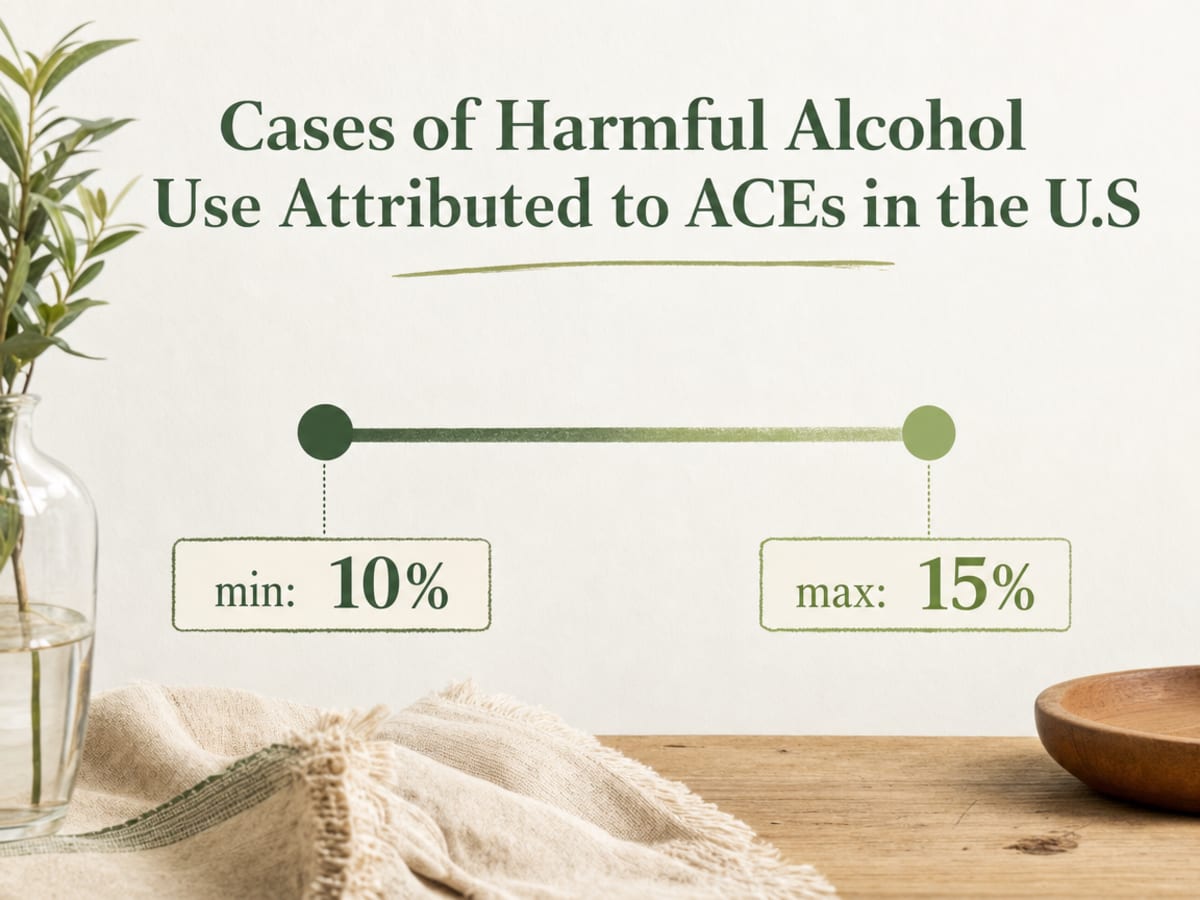

An umbrella review reports that 10-15% of harmful alcohol use cases in the U.S. can be attributed to Adverse Childhood Experiences (ACEs).
What to Ask Before You Walk Through the Door
You don’t have to figure out whether a program is the real thing on a tour or a phone call. You just need to ask a few plain questions and listen to how they answer.4,11
- How is your staff trained in trauma-informed care, and who gets that training? If only the therapists are trained and the techs aren’t, the 3 a.m. moment won’t feel safe.
- Do you treat PTSD, depression, and anxiety at the same time as the substance use, or after? Concurrent is the answer you want.
- Am I required to share my trauma in group? No is the right answer.
- What happens if I say no to a specific therapy? Listen for choice, not consequences.
- What does aftercare look like on day 61? A real plan, not a phone number.
If a program gets defensive at these questions, you have your answer. If someone slows down and walks you through each one, you’re closer to the place that can actually hold what you’re carrying. Country Road Recovery is one of the programs built this way, in Tecumseh, Oklahoma — but the questions matter more than any single name. Ask them anywhere you call.
Reach Out to Start Healing From Within
Connect now to take your first supported step toward trauma-informed recovery.
Frequently Asked Questions
What is the difference between trauma-informed care and trauma-focused therapy?
Trauma-informed care is the way the whole program runs — how staff talk to you, how groups are structured, how safety is built into every hour. Trauma-focused therapy is a specific set of treatments, like EMDR or cognitive processing therapy, that directly work on a traumatic memory. You get the first from day one. The second is offered when you’re ready.4
Do I have to talk about my trauma in detail to get better?
No. You are never required to recount a specific memory to enter or stay in a trauma-informed program. Good care starts with your body feeling safe — sleep, food, predictable days, staff who don’t push. Deeper trauma work is offered only when you choose it and your nervous system has settled enough to do it without falling apart.4
Why do I keep relapsing after detox or abstinence-only programs?
Because detox removes the substance, not the reason you reached for it. If using has been regulating a nervous system that never felt safe, taking the substance away without treating the underlying trauma, anxiety, depression, or PTSD leaves the original wound wide open. A 2025 review found trauma-informed care improved substance use outcomes and retention where standard care did not.3
How do I know if a recovery program is actually trauma-informed?
Ask who gets trauma training — if only therapists and not techs or intake staff, the 3 a.m. moment won’t be safe. Ask if you can decline a specific therapy without penalty. Ask whether PTSD and substance use are treated at the same time. Real trauma-informed programs answer these calmly and specifically. Defensive answers tell you what you need to know.4
Can PTSD and addiction be treated at the same time, or do I have to get sober first?
At the same time. The VA/DoD clinical guideline states directly that PTSD and co-occurring conditions, including substance use disorders, should be treated concurrently through an integrated approach. The old advice to get sober first leaves the PTSD symptoms your using was covering fully exposed. Concurrent care is what the evidence supports, for veterans and civilians alike.11
What if I don’t remember a specific trauma but still feel like something is wrong?
You don’t need a single dramatic memory for trauma-informed care to help you. Chronic stress, neglect, an unstable home, loss you never got to grieve — these shape a nervous system too. Across safety-net clinics, 84.8% of patients reported at least one adverse childhood experience. Trauma work meets the body where it is, not where a story says it should be.9
References
- Feasibility and outcomes of a trauma-informed model of care in residential substance use treatment. https://pubmed.ncbi.nlm.nih.gov/39566845/
- Effects of Integrated Trauma Treatment on Outcomes in a Racially and Ethnically Diverse Sample of Women in Urban Community-Based Substance Abuse Treatment. https://pmc.ncbi.nlm.nih.gov/articles/PMC2219564/
- A Systematic Review of Trauma Informed Care in Addiction Services. https://pubmed.ncbi.nlm.nih.gov/39641885/
- Trauma-Informed Care in Behavioral Health Services: Quick Guide for Clinicians (Based on TIP 57). https://www.samhsa.gov/resource/dbhis/trauma-informed-care-behavioral-health-services-quick-guide-clinicians-based-tip-57
- TIP 57: Trauma-Informed Care in Behavioral Health Services. https://library.samhsa.gov/product/tip-57-trauma-informed-care-behavioral-health-services/sma14-4816
- Trauma-Informed Care in Behavioral Health Services (SAMHSA Brochure). https://library.samhsa.gov/product/trauma-informed-care-behavioral-health-services/sma15-4420
- An Umbrella Review of the Links Between Adverse Childhood Experiences and Substance Use Outcomes. https://pmc.ncbi.nlm.nih.gov/articles/PMC9675346/
- Adverse Childhood Events as Risk Factors for Substance Dependence: Partial Mediation by Mood and Anxiety Disorders. https://pmc.ncbi.nlm.nih.gov/articles/PMC2763992/
- Association of Adverse Childhood Experiences (ACEs) and Substance Use Disorders (SUDs) in a Multi-Site Safety Net Healthcare Setting. https://pmc.ncbi.nlm.nih.gov/articles/PMC7752652/
- Associations Between Adverse Childhood Experiences and Substance Use: A Meta-Analysis. https://pubmed.ncbi.nlm.nih.gov/37689565/
- VA/DoD Clinical Practice Guideline for Management of Posttraumatic Stress Disorder and Acute Stress Disorder. https://www.govinfo.gov/content/pkg/GOVPUB-VA-PURL-gpo33181/pdf/GOVPUB-VA-PURL-gpo33181.pdf
- Substance Use in Women – DrugFacts (NIDA). https://nida.nih.gov/publications/drugfacts/substance-use-in-women


