
Key Takeaways
- The first admissions call is mostly listening — a counselor gathers your use history, insurance, job situation, and family details without any commitment on your end.
- Oklahoma residential care is billed as an all-inclusive per diem rate, so cost is a knowable number verified during the call, not a surprise itemized bill.2
- FMLA, ADA, and federal parity laws protect your job and benefits when you seek treatment, and admissions can identify which specific protections apply to your employer and plan.
- Length of stay is a working clinical plan reviewed on a regular schedule, not a fixed sentence handed down on day one.5
- Bed availability is tight nationally but real, so ask directly when you could come in and expect a concrete day, range, or next step.8
- You control what family members are told and when, and involving them through structured programming tends to improve engagement and outcomes.11
- Co-occurring depression, anxiety, or trauma should be named on the call — Oklahoma rules require mental health and substance use care be delivered together.6
- Verify you’re talking to a real program by asking about ODMHSAS certification and accreditation, live insurance verification, and what happens if you aren’t a clinical fit.7
The Phone Call Is the Hardest Part
You’ve probably had the number pulled up on your phone more than once. Maybe you got as far as the area code before you put it down again.
That’s the part nobody talks about. Not the therapy. Not the withdrawal. Not the family meeting. The phone call. The ten minutes where you have to say out loud, to a stranger, that something is wrong and you can’t fix it by yourself anymore.
It makes sense that this is where you’re stuck. You’re not weighing a treatment plan yet. You’re weighing what happens if you tell the truth. What will it cost? Will your job still be there? Who watches your kids? What do you even say when someone picks up?
This guide answers those questions in the order they actually keep you awake. Not what rehab is. What the call is. What the admissions team at Country Road can verify for you, on the line, before you commit to anything, so you’re not guessing about your insurance, your job, or your family while you decide.
What Actually Happens on the First Admissions Call
Here’s the thing that might surprise you: the first call is mostly listening. Not a script. Not a pitch. Someone asking you questions and writing down what you say.
The admissions counselor is trying to figure out two things at once. What you’re using and how much. And what’s happening in your life around it — your insurance, your job, whether there are kids at home, whether you have a court date coming up, whether you’re coming straight from detox or trying to get through the weekend first.
Under Oklahoma rules, a residential program has to confirm you actually meet criteria for that level of care before they can admit you. That means two clinical questions get asked early: whether your use fits the DSM definition of a substance use disorder, and where you land on the ASAM placement tool, which is the standard framework for deciding if residential care is the right fit or if outpatient would work. It sounds technical. In practice, it’s the counselor asking about your drinking or using patterns, withdrawal history, past attempts to stop, and what your home environment looks like.1
Then the practical stuff. They’ll ask for the front and back of your insurance card and verify your benefits directly — you don’t have to guess what’s covered. They’ll ask about your job, and whether you want help drafting FMLA paperwork or a letter to HR. They’ll ask who at home needs to know, and how much you want them to know. If you’re coming from detox, they coordinate transportation. If you have a hearing next month, they document that so the program can support you around it.
You can also stop the call at any point. You are not signing anything by talking. You’re gathering information — the same information a good admissions team gathers about you.
Most calls run 20 to 45 minutes. By the end, you should know whether your insurance covers a stay, roughly when a bed would be available, and what the next concrete step is. If a program can’t tell you those three things on the first call, that’s worth noticing.

What Rehab Actually Costs — And Why It Isn’t a Surprise Bill
Cost is usually the fear that shuts the conversation down before it starts. You’ve heard numbers thrown around online — $30,000, $60,000, more. You picture a bill arriving three months later with line items you never agreed to.
That’s not how residential care is billed, at least not in Oklahoma.
Under state Medicaid rules, residential SUD treatment is reimbursed on a per diem basis, which is defined as “an all-inclusive rate for covered SUD treatment services provided each day during a facility stay.” Translation: one daily rate covers your bed, your meals, your groups, your individual therapy, your medical oversight, your medication management. You are not going to get a separate invoice for the CBT session you had on Tuesday and another for the Wednesday group. Commercial insurance plans work differently in the details, but the same principle usually holds — residential is bundled, not itemized like an emergency room visit.2
What you’re paying for, in Oklahoma, is a specific standard of care. Residential treatment is defined as “a live-in setting which provides a regimen consisting of twenty-four (24) treatment hours per week” in a 24/7 structured environment. That’s roughly four hours of clinical programming a day, every day, plus the housing, food, and supervision around it. When you compare a daily rate to what a day of care actually contains, the math looks different than a scary lump-sum figure.3
Here’s what the admissions call can actually tell you about your cost:
- Whether your specific insurance plan covers residential SUD care, and at what level.
- What your deductible and out-of-pocket maximum look like for the calendar year — and how much of it you’ve already met.
- Whether medical necessity criteria are likely to be met for your situation, which affects whether insurance will authorize the stay in the first place.1
- What any remaining balance would be, and whether payment plans or financial assistance are available.
You don’t have to figure this out alone from a benefits booklet. The admissions team calls your insurer directly, gets the numbers in writing, and reads them back to you. If a program can’t or won’t verify benefits on the first call, that’s a signal to ask why.
The honest answer to “what will this cost me?” is that it depends on your plan and your situation. But it’s a knowable number — not a mystery you have to accept blind.
Your Job: What FMLA, ADA, and Parity Actually Protect
This is often the fear that overrides all the others. Not because you don’t care about your health — because you can’t afford to lose your paycheck, your benefits, or the reputation you’ve spent years building.
Here’s what’s actually true, in broad strokes, before the admissions team gets into your specific situation.
FMLA covers a lot of people you might not expect. If your employer has 50 or more employees within 75 miles, and you’ve worked there at least 12 months and clocked at least 1,250 hours in the last year, you’re generally eligible for up to 12 weeks of unpaid, job-protected leave for a serious health condition. Substance use disorder, when you’re getting treatment from a healthcare provider, counts. Your job — or an equivalent one — has to be there when you come back. Your group health insurance keeps running while you’re out.
The paperwork is the part people trip on. Your provider certifies the condition and the leave. Your employer doesn’t get your diagnosis or your chart. They get a form that says you have a serious health condition and need leave for a defined window. The admissions team at Country Road can walk you through what to hand your HR department, and can coordinate with your treatment provider to get the certification signed in time.
The ADA protects the recovery, not the active use. The Americans with Disabilities Act treats a person in treatment or recovery as a person with a disability, which means your employer generally can’t fire you for seeking help or for being in recovery. It does not protect current illegal drug use on the job. The practical read: getting into treatment moves you into protected territory. Waiting until something happens at work usually doesn’t.
Mental health parity is why your insurance covers this at all. Federal parity law requires most group health plans to cover substance use and mental health treatment on comparable terms to physical health treatment. That’s why residential SUD care is a covered benefit under most commercial plans, not an out-of-pocket luxury.
Long-term, the data is on the side of going. A study of SUD treatment and work outcomes found that
“completion of treatment was significantly associated with increased likelihood of employment and improved job stability.”12
The version of you that finishes treatment is a more reliable employee than the version trying to hold it together right now.
You don’t have to memorize any of this before you call. The admissions team can tell you, based on your employer size and your specific plan, exactly which protections apply to you.

Time Away: What 30, 60, or 90 Days Really Looks Like
Thirty days sounds like forever when you’re the one who has to disappear from your life for it.
So let’s make it concrete. Residential treatment in Oklahoma is defined as a live-in setting providing 24 treatment hours per week in a 24/7 structured environment. That’s roughly four hours of clinical work each day — individual therapy, group sessions, psychoeducation, sometimes art or equine therapy — with the rest of your day spent eating meals, sleeping in a bed, doing the human maintenance you probably haven’t been doing well for a while.3
The length isn’t a marketing number. It’s tied to what your clinical team determines you need, reviewed and updated as you go. Oklahoma standards require that a comprehensive service plan be completed early in your stay and revisited on a regular schedule, so 30, 60, or 90 days isn’t a sentence handed down on day one. It’s a working plan that gets adjusted based on how you’re actually doing.5
A rough shape of what those windows look like in practice:
- The first 7 to 10 days: Stabilization. Sleep starts coming back. Meals get regular. You meet your therapist and start figuring out what your groups look like.
- Weeks two through four: The clinical work opens up. You dig into what’s underneath the using — trauma, depression, anxiety, the patterns you’ve been running.
- Beyond 30 days: The work gets deeper and the transition planning starts. Step-down to PHP or IOP, aftercare, family sessions, workforce reentry.
You are not locked in for a preset number of days on the admissions call. The team can tell you what your insurance is likely to authorize, what your clinical situation typically calls for, and how the length gets adjusted as you go. Time away is a plan, not a verdict.
Is There a Bed for Me Right Now? Timing and Capacity
You finally get to a place where you’re ready to call — and then a new fear shows up. What if they say no? What if there’s a waitlist? What if the window closes before you can get in?
Here’s the honest picture. Nationally, residential SUD bed capacity is real, but tight. SAMHSA’s 2019 National Survey of Substance Abuse Treatment Services counted 88,447 residential (non-hospital) beds across 2,710 facilities, with a 95% utilization rate. The 2020 survey counted 61,743 residential beds across 1,920 facilities, with a 79% utilization rate. Two things are true at the same time: beds exist, and demand consistently runs high enough that timing matters.8,9
What that means for your call: you might get in tomorrow. You might get in Friday. You might be looking at a few days of coordination while insurance authorization comes through, transportation from detox is arranged, or a bed opens up in the specific track that fits you.
The admissions team can tell you, in one conversation, what current bed availability looks like at Country Road, what the timeline is for your specific situation, and what to do in the meantime. If a bed isn’t open the day you call, that isn’t the end of the conversation — it’s the start of a short-term plan. That can include a safe place to stay, a check-in schedule, a warm handoff to detox if that’s the right next step, or a referral to SAMHSA’s free, confidential 24/7 National Helpline while a bed comes open.10
Your Family: Kids, Partners, and the Conversations You’re Dreading
Who watches your kids on Tuesday. Who tells your mom. Whether your partner will still be there when you get out. These aren’t small questions. They’re the ones that keep you scrolling instead of dialing.
Start with the practical layer, because that’s the one the admissions team can actually help you build a plan around on the call. They’ll ask who is in your household, who depends on you day to day, and what supports you already have — a co-parent, a sibling, a neighbor, a church, a school pickup line that needs a new name on it. Then they help you sequence it: who gets told first, what they need to know, and what can wait. If there’s a partner who’s been carrying too much for too long, the admissions team can offer to be on the call when you tell them, so you’re not doing it alone.
You control what’s shared. Under federal privacy rules, your treatment information doesn’t go anywhere without your written consent. You decide whether your employer, your parents, or your kids’ other parent get updates, and how much.
The harder layer is the fear that leaving will damage the people you love more than staying will. The evidence points the other way. A peer-reviewed review of family-based approaches in SUD care found that
“family-based approaches are associated with improved treatment engagement and outcomes for individuals with substance use disorders.”11
Bringing your family into the work — through family education, structured sessions, and clear communication — tends to strengthen those relationships, not break them.
Kids do better with a parent who came back healthier than with a parent who stayed and kept using. That’s not a slogan. It’s what the research on family involvement keeps showing.
Ask the admissions team what family programming looks like, when visits happen, and how communication with your kids will work while you’re there. You should get specific answers, not vague reassurance.
If You’re Also Struggling With Depression, Anxiety, or Trauma
You already know the using isn’t the whole story. There’s something underneath it — the anxiety that starts around 4 p.m., the depression that flattens the mornings, the memories that show up when the drinking slows down. That’s the part you’re most afraid to say out loud on the phone.
Say it anyway.
Programs that only treat the substance and ignore what’s driving it tend not to hold. Oklahoma’s regulations recognize this: adult residential treatment for people with co-occurring conditions requires that substance use and mental health care be delivered together in a “planned regimen of twenty-four (24) hour structured evaluation, care, and treatment” in a “safe, welcoming, and culturally/age appropriate environment.” Dual diagnosis isn’t a specialty add-on. In a properly certified program, it’s the baseline.6
Trauma-informed care is the other piece. A SAMHSA-backed review describes it as an approach that “acknowledges the role that trauma plays in people’s lives and integrates this understanding into all aspects of service delivery.” In practice, that means clinicians who don’t ask you to explain your worst day in a room full of strangers on Tuesday morning. It means pacing. It means groups on grounding and regulation before groups on disclosure. It means staff trained to notice when a body has gone somewhere else and know how to help it come back.13
On the admissions call, tell the counselor what you’re carrying. Depression. Panic attacks. PTSD from combat, from childhood, from something more recent. A prior diagnosis, or a suspicion you’ve never named to a doctor. They’ll ask about current medications, past hospitalizations, and any safety concerns. None of that gets you disqualified. It gets you matched to the clinicians and groups that actually fit your situation — including trauma-focused therapy, individualized planning for veterans, and psychiatric care alongside the substance use work.
The version of treatment that leaves the mental health piece alone is the version that doesn’t stick. Asking for both is asking for the treatment that has a chance.
How to Tell a Real Program from a Sales Pitch
Some of the numbers you’ll dial belong to call centers. Not treatment programs. A sales floor somewhere, matching your insurance to whichever facility pays the highest referral fee that week. You deserve to know the difference before you talk.
Ask three questions early:
“Are you licensed and accredited, and by whom?” In Oklahoma, a real residential program has to hold current certification from ODMHSAS and accreditation from The Joint Commission, CARF, or COA to bill for care. Those aren’t logos on a website. They’re outside bodies that inspect the clinical work, the staffing ratios, and the safety protocols. Country Road is CARF accredited. If a voice on the phone can’t name their accreditor, you’re not talking to the program.7
“Can you verify my insurance while we’re on the call?” A real admissions team pulls up your benefits and reads them back. A call center pushes you toward whichever facility their script is selling that shift.
“What happens if I’m not a good clinical fit?” A real program will tell you. Medical necessity criteria and ASAM placement decide the level of care that fits you, not a sales quota. If the answer is “everyone is a fit,” hang up.1
Trust the call that answers your questions. Not the one that closes them.
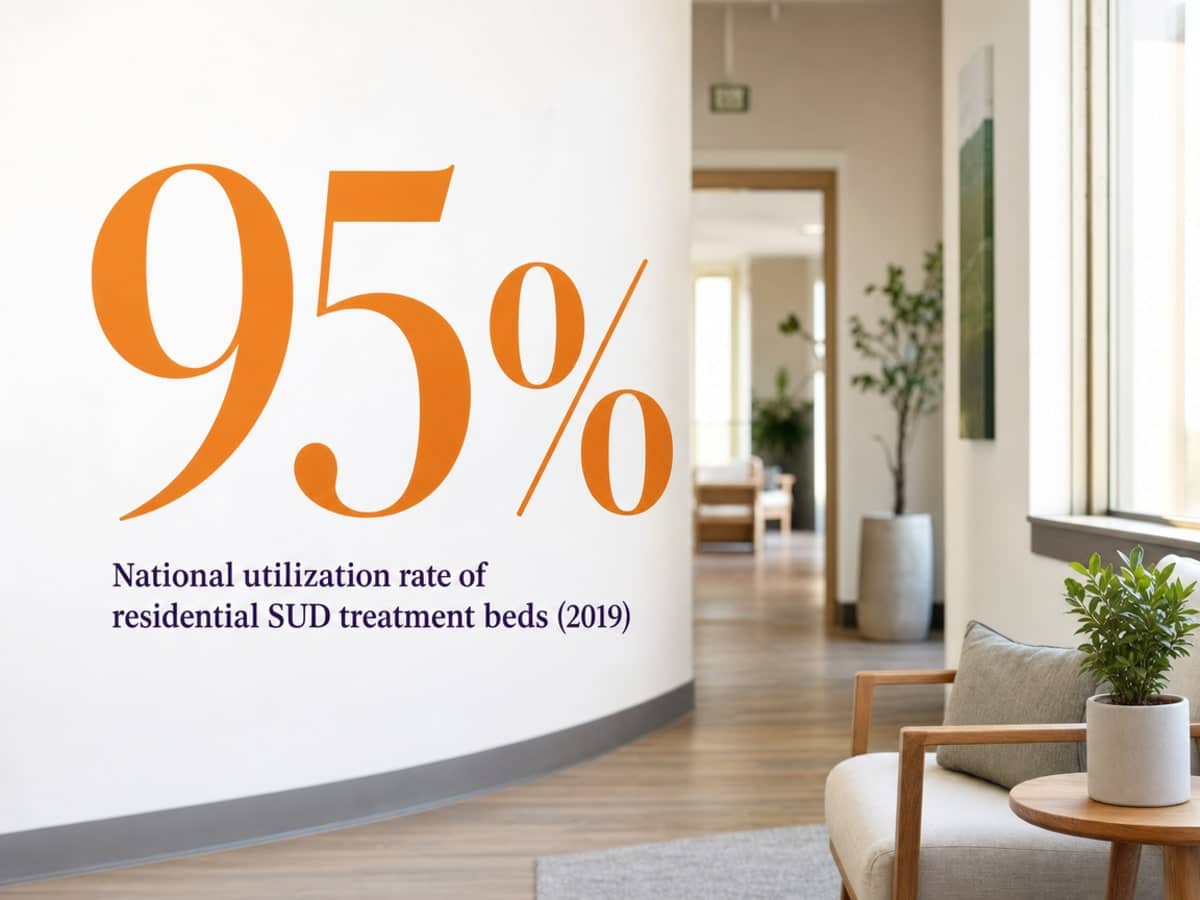

National utilization rate of residential SUD treatment beds (2019)
What to Say When You Pick Up the Phone
You don’t need a script. You don’t need to know the clinical words. You don’t need to have decided anything yet.
Here’s what works:
“I think I need help, and I’m not sure what to do next.”
That’s a full sentence. The admissions counselor takes it from there.
If you want a little more to hold onto, three pieces of information make the call go faster — but none of them are required to start:
- The name of your insurance and the ID number on the card (front and back if you can text a photo).
- What you’re using and roughly how much, so they can gauge whether detox needs to come first.
- One thing about your life you’re worried about — your job, your kids, a court date, getting a ride there.
You can call from your car. You can call at 2 a.m. You can hang up and call back tomorrow.
The admissions team at Country Road answers these specific questions — your insurance, your job, your family, your timing — with real numbers, not slogans. Pick up the phone when you’re ready.
Get Real Answers About Starting Your Recovery
Connect directly for honest, judgment-free answers to your admissions questions—no pressure, just support.
Frequently Asked Questions
Will my employer find out if I go to rehab?
Not unless you tell them. Federal privacy rules keep your treatment information confidential — nothing is released without your written consent. If you use FMLA leave, your employer receives a certification that you have a serious health condition needing treatment, not your diagnosis or clinical records. The admissions team can walk you through exactly what your HR department sees and what stays private.
How much will I actually have to pay out of pocket?
It depends on your specific plan, your deductible, and how much you’ve already met this year. In Oklahoma, residential SUD care is billed as an all-inclusive per diem rate — one daily number that covers your bed, meals, therapy, and medical oversight. The admissions team calls your insurer directly on the first call, verifies benefits in writing, and reads the numbers back to you. No guessing.2
What do I need to say when I call the admissions line?
“I think I need help, and I’m not sure what to do next.” That’s enough. The counselor asks the rest. If you want to speed things up, have your insurance card handy, know roughly what you’re using and how much, and mention one thing you’re worried about — your job, your kids, a court date. You don’t need clinical words. You don’t need a decision yet.
Can I go to rehab if I have a court date or open legal case?
Yes, and it often helps your case. Country Road offers court date assistance and can document your treatment for your attorney or the court. Tell the admissions counselor about any hearings, probation requirements, or pending charges on the first call. They coordinate the timing of your stay around court obligations and provide the letters and attendance verification your legal team needs. Treatment does not have to conflict with your case.
What happens to my kids while I’m in treatment?
You build the plan on the admissions call. The counselor asks who’s in your household, who can step in, and what supports you already have. You control what your kids are told and when. Family education programming and structured contact are part of the treatment, and research shows family involvement improves engagement and outcomes. Kids do better with a parent who came back healthier than one who kept using.11
What if I also have depression, anxiety, or PTSD?
Tell the admissions counselor. Oklahoma’s rules require residential programs to deliver substance use and mental health care together for people with co-occurring conditions. That means psychiatric care, trauma-focused therapy, and medication management run alongside the substance use work — not as an add-on. A prior diagnosis, current medications, or a suspicion you’ve never named to a doctor doesn’t disqualify you. It helps match you to the right clinicians.6
References
- SECTION 95.46. Residential substance use disorder (SUD) – Covered services and medical necessity criteria. https://oklahoma.gov/ohca/policies-and-rules/xpolicy/medical-providers-fee-for-service/individual-providers-and-specialties/inpatient-psychiatric-services/residential-substance-use-disorder-covered-services-and-medical-necessity-criteria.html
- SECTION 95.43. Residential substance use disorder treatment. https://oklahoma.gov/ohca/policies-and-rules/xpolicy/medical-providers-fee-for-service/individual-providers-and-specialties/inpatient-psychiatric-services/residential-substance-use-disorder-treatment.html
- CHAPTER 18. Standards and Criteria for Substance-Related and Addictive Disorder Treatment Facilities (2023 update). https://oklahoma.gov/content/dam/ok/en/odmhsas/documents/policy/provider-certification/administrative-rules/2023/PC–Chapter-18-Final-effective-9-15-23.pdf
- Administrative Rules – Chapter 18 Effective 11-16-20. https://oklahoma.gov/content/dam/ok/en/odmhsas/documents/policy/provider-certification/administrative-rules/2020/AdminRules-Chapter18–11-16-20.pdf
- CHAPTER 24. Standards and Criteria for Comprehensive Community Addiction Recovery Centers. https://oklahoma.gov/content/dam/ok/en/odmhsas/documents/policy/provider-certification/administrative-rules/2021/Chapter%2024%20Final%20effective%209-15-21.pdf
- Okla. Admin. Code § 450:18-13-141 – Adult residential treatment for consumers with co-occurring disorders. https://www.law.cornell.edu/regulations/oklahoma/OAC-450-18-13-141
- Okla. Admin. Code § 317:30-5-95.44 – Residential substance use disorder (SUD) – Eligible providers and requirements. https://www.law.cornell.edu/regulations/oklahoma/OAC-317-30-5-95.44
- 2019 National Survey of Substance Abuse Treatment Services (N-SSATS). https://www.samhsa.gov/data/sites/default/files/reports/rpt29389/2019_NSSATS/2019-NSSATS-R.pdf
- 2020 National Survey of Substance Abuse Treatment Services (N-SSATS). https://www.samhsa.gov/data/sites/default/files/reports/rpt35313/2020_NSSATS_FINAL.pdf
- SAMHSA’s National Helpline. https://www.samhsa.gov/find-help/national-helpline
- Family-based approaches to substance use disorder treatment. https://www.ncbi.nlm.nih.gov/pmc/articles/PMC3032175/
- The impact of substance use disorder treatment on employment outcomes. https://www.ncbi.nlm.nih.gov/pmc/articles/PMC5593218/
- Trauma-informed care in behavioral health services. https://www.ncbi.nlm.nih.gov/pmc/articles/PMC4418673/


